Innova Aviar Putter Review: Still the Putter to Beat in 2026?
The Innova Aviar has been the default putter for 40 years. We break down flight, the confusing variants (P&A, KC Pro, Aviar3), plastics, and who should buy one.
This post contains affiliate links. If you buy through them we may earn a commission at no extra cost to you. Learn more.
Table of contents
The Innova Aviar was released in 1984, one year after Innova’s first disc, and it has been the best-selling putter in disc golf more or less ever since. Twelve-time world champion Ken Climo won most of his titles putting with one. It’s the putter in Innova’s starter sets, it’s the mold other companies get compared to, and it’s the disc most pros will hand a beginner who asks “what should I putt with?”
That’s a lot of history. The question for a buyer in 2026 is simpler: is there any reason to pick something else? This review covers how the Aviar flies, why the variant names are so confusing, which plastic to get, and how it stacks up against the two putters most people cross-shop it with — the Dynamic Discs Judge and the Discraft Luna.
Which Aviar is this review about?
Unless stated otherwise, everything below refers to the standard Aviar Putt & Approach (often written “Aviar P&A”), the beadless model with flight numbers 2/3/0/1. The other variants get their own section.
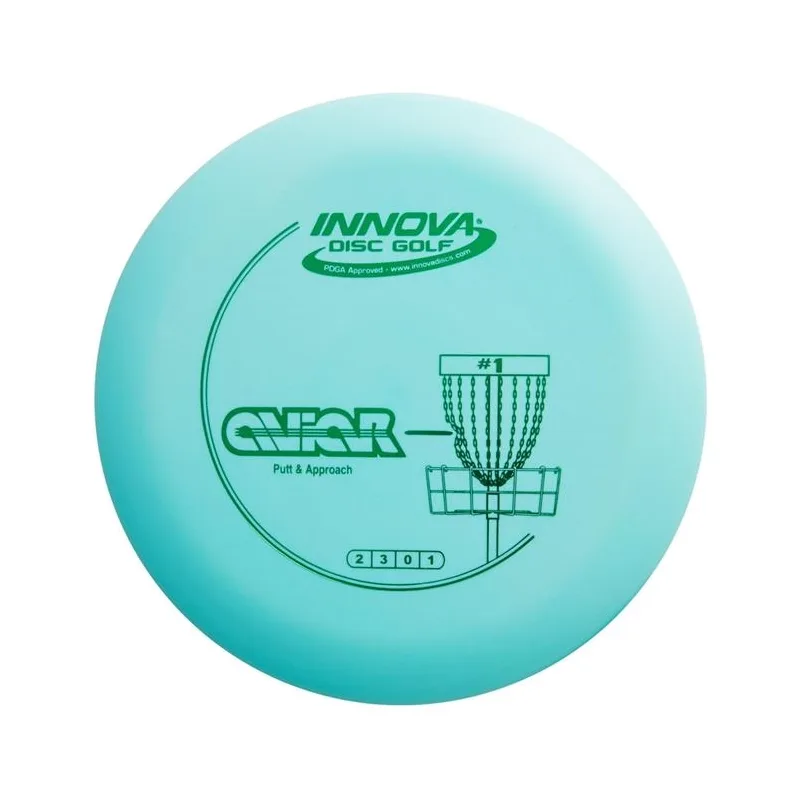
Innova Aviar Putt & Approach
4.5/5$9 (DX) – $17 (Star/Champion) approx. street price
- Flight numbers: 2 / 3 / 0 / 1
- Rim: Beadless, medium depth
- Plastic options: DX, Pro, R-Pro, Star, Champion, Nexus, Halo
- Feel: Neutral, slightly domey
Pros
- Straight, predictable flight at putting speed with a soft, reliable fade
- Beadless, medium-depth rim works for fan, power and stack grips
- Available in more plastics and weights than any other putter
- Cheap enough to buy three for practice
Cons
- Less glide than the Judge or Luna on long putts
- Variant naming (P&A, KC Pro, Aviar3, JK) confuses buyers
- DX plastic gets flippy after a season of tree hits
| Product | Our rating | Flight numbers | Rim | Plastic options | Feel | Price | Buy |
|---|---|---|---|---|---|---|---|
| Best all-round putter Innova Aviar Putt & Approach | 4.5/5 | 2 / 3 / 0 / 1 | Beadless, medium depth | DX, Pro, R-Pro, Star, Champion, Nexus, Halo | Neutral, slightly domey | $9 (DX) – $17 (Star/Champion) | Check Price |
| More glide Dynamic Discs Judge | 4.5/5 | 2 / 4 / 0 / 1 | Beaded, medium depth | Classic, Classic Blend, Prime, Lucid, Fuzion | Deep, beaded, grippy | $10 (Classic) – $18 (Lucid) | Check Price |
| More stability Discraft Luna (Paul McBeth) | 4.5/5 | 3 / 4 / 0 / 2 | Beadless, 1.1 cm, flat top | Putter Line, Jawbreaker, Rubber Blend, ESP, Z | Flat, firm rim | $13 (Putter Line) – $28 (Tour Series) | Check Price |
Specs and feel
| Innova Aviar Putt & Approach | |
|---|---|
| Type | Putter / approach disc |
| Flight numbers | 2 / 3 / 0 / 1 |
| Diameter | 21.1 cm |
| Rim | Beadless, medium depth, slightly rounded |
| Weights | 150–175 g (170–175 g most common) |
| Plastics | DX, Pro, R-Pro, Star, Champion, Nexus, Halo Star, and limited runs |
| Introduced | 1984 |
| PDGA approved | Yes |
The Aviar has a medium-depth, beadless rim with a gently rounded edge and a slight dome on top. That description sounds boring, and that’s the point: there is nothing about the rim that any grip style objects to. Fan grip, power grip, stacked fingers, thumb on the flight plate — the Aviar accommodates all of them. That’s a big reason it works as a first putter: it doesn’t force you into a technique.
In hand, DX and Pro Aviars are soft and tacky; Star and Champion are firmer and a bit slicker until they scuff up. The most frequent community comment about feel is that it’s “neutral” — players who move to a beaded putter like the Judge often say they miss nothing about the Aviar rim, but players who move back say the same thing.
How the Aviar flies
We haven’t run a controlled test on the Aviar for this review. The flight description below is a synthesis of Innova’s published flight data, PDGA specs, and several hundred owner reviews and forum threads from long-time Aviar users. It matches what you’ll hear from nearly any experienced player.
Inside the circle (up to 10 m / 33 ft): dead straight. At putting speed the Aviar does not turn and barely fades; you aim at the pole and it goes there. Its glide (3) is moderate — enough to reach the basket with a soft push putt, but it won’t float past the chains the way a high-glide putter can on a downhill putt.
Long putts and approaches (10–60 m): this is where the “Putt & Approach” name earns itself. Thrown flat with moderate power, an Aviar holds a straight line for most of its flight and finishes with a small, predictable fade. Thrown on a hyzer it holds the hyzer without flipping. In DX plastic, a well-used Aviar will start to turn slightly right at speed, which many players actually like for straight tunnel shots.
Off the tee: the P&A is usable for short holes but it is not a driving putter. If you want to throw putters 90+ m, look at the KC Pro Aviar, the Aviar3, or the Discraft Luna.
In wind: adequate, not exceptional. Its fade rating of 1 means a strong headwind will lift it. Heavier weights (173–175 g) and stiffer plastic help; for genuinely windy courses the Aviar3 or Luna are better choices.
The one-sentence summary you’ll read in every thread: the Aviar does exactly what you tell it to. That predictability is the whole selling point.
The Aviar variants explained
This is where Innova makes things harder than they need to be. All of these are “Aviars”, but they’re different discs:
- Aviar Putt & Approach (P&A) — the standard beadless putter. 2/3/0/1. The one in the starter set and the one this review is about.
- KC Pro Aviar / “Aviar Driver” — Ken Climo’s signature version. Beaded rim, a bit flatter and more stable. Better for throwing, less comfortable for some putting grips.
- JK Pro Aviar — Juliana Korver’s signature. Beadless, softer, slightly more understable and flexible. Some players love it for cold weather.
- Aviar3 — a flatter, more overstable Aviar (roughly 3/2/0/2) designed for wind and throwing. Fades noticeably at the end.
- Aviar-X — beaded and more overstable than the P&A. Fewer runs; popular with older players.
- Big Bead Aviar — self-explanatory; pronounced bead, more stable.
- Yeti Aviar, Nexus Aviar, Halo Aviar, etc. — signature or plastic-specific runs of the standard P&A mold. Same flight, different feel and looks.
For a first putter, buy the plain Aviar Putt & Approach. Try the others once you know whether you want more stability (KC Pro, Aviar3) or a softer feel (JK Pro).
Which plastic should you buy?
| Plastic | Feel | Durability | Best for |
|---|---|---|---|
| DX | Soft, grippy | Low | Putting; cheap practice putters |
| Pro | Softer, tackier | Low-medium | Putting in cold or wet weather |
| R-Pro | Very soft, rubbery | Medium | Players who want maximum grip |
| Star | Firm, slightly grippy | High | Approaches and throwing; wooded courses |
| Champion | Firm, glossy | Very high | Durability first; slicker until broken in |
| Nexus / Halo | Premium blends | High | Collectors and specific feel preferences |
Community consensus: putt with DX, throw with Star. DX is the plastic in the starter set and most players keep it for the circle because its grip and slight give feel best releasing off the fingers. For a disc you’ll throw at trees on approaches, Star holds its flight far longer. Champion is the most durable but it flies a bit more stable and takes a while to lose its slick surface, which some putters dislike.
Whatever plastic you choose, buy two or three of the same putter. Practicing putting with a single disc is painfully slow, and consistency comes from repetitions with identical discs.
Innova Aviar vs the alternatives
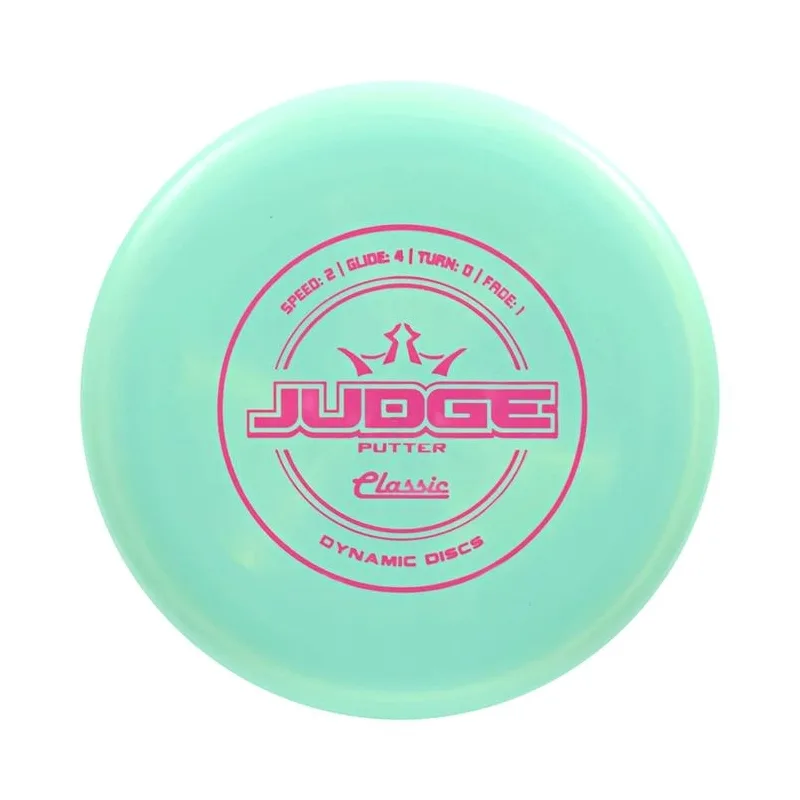
Dynamic Discs Judge
4.5/5$10 (Classic) – $18 (Lucid) approx. street price
Pros
- Exceptional glide for long putts and approaches
- Beaded rim locks into the hand for many players
- Prime and Classic plastics are very grippy
Cons
- Bead is a deal-breaker for some grips
- Slightly less predictable in strong headwinds
Aviar vs Judge. The Judge (2/4/0/1) is the Aviar’s most popular rival and the putter in Dynamic Discs’ starter set. The differences are glide and the bead. The Judge floats longer on the same throw, which helps on long putts and approaches but can carry a soft putt past the basket. Its beaded rim gives many players a more locked-in grip; others find the bead annoying and never adjust. If you’ve tried both and have no preference, the Aviar is a few dollars cheaper and available in more plastics. Read the full Dynamic Discs Judge review and the shot-by-shot Aviar vs Judge comparison.
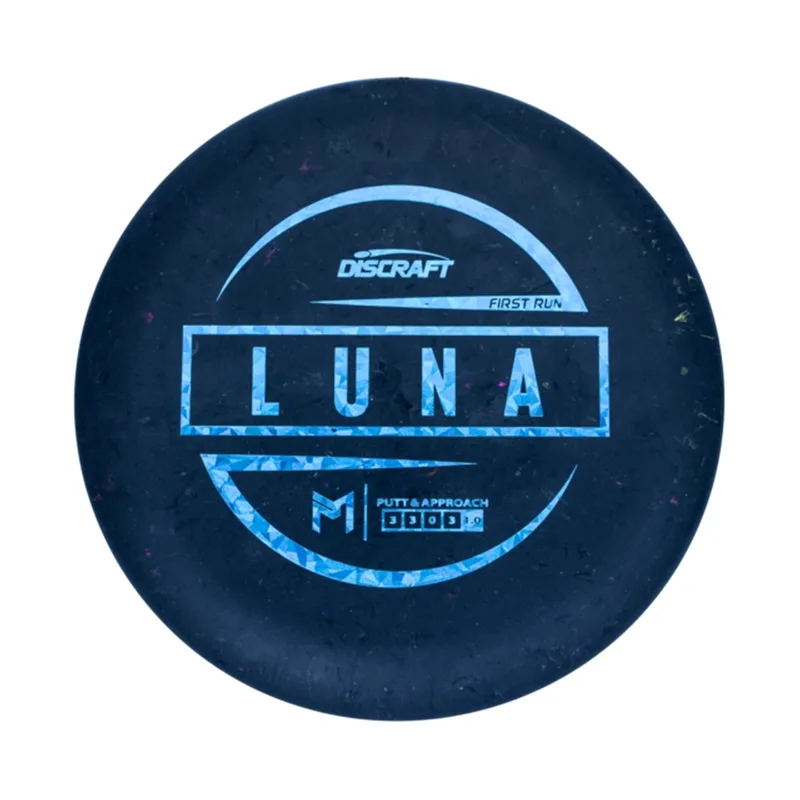
Discraft Luna (Paul McBeth)
4.5/5$13 (Putter Line) – $28 (Tour Series) approx. street price
Pros
- Holds a line in wind better than the Aviar
- Excellent for throwing putters off the tee
- Jawbreaker and Rubber Blend feel great in cold weather
Cons
- More expensive than the Aviar or Judge
- Slight overstability makes short, soft putts a little less forgiving
Aviar vs Luna. Paul McBeth’s Luna (3/4/0/2 per Discraft’s updated numbers) is a slightly faster, more overstable putter with a flatter top. It’s superior in wind and off the tee, and its rim is beadless like the Aviar’s, so the switch is comfortable. The cost is a little forgiveness on short, soft putts, where the Luna’s extra fade can pull a weak putt low-left. It’s also 30–50% more expensive. If you play windy or open courses, the Luna is arguably the better disc; on a wooded, technical course the Aviar’s straighter, softer finish wins. For the bigger brand-level picture, see Innova vs Discraft.
Who should buy the Aviar
Buy it if:
- You’re choosing your first putter and don’t yet know what you want.
- You want the widest selection of plastics and weights of any putter.
- You play technical, wooded courses where a straight finish matters more than wind resistance.
- You want three identical putters for practice without spending $50.
Look elsewhere if:
- You play windy, open courses (→ Luna, Aviar3, Discraft Zone for approaches).
- You already know you love a beaded rim (→ Judge, KC Pro Aviar).
- You want a putter you can drive with regularly (→ Luna, Aviar3, Axiom Envy).
Verdict
4.5/5The Aviar is not the most exciting putter you can buy, and it’s not the best in wind. It is the most neutral — in feel, in flight, and in price — and for a putter, neutral is a feature. Four decades on, it remains the correct first putter for most players and a perfectly good last putter for many of them.
How we evaluated this gear
We have not physically tested every product on this page. Ratings are based on manufacturer specifications, PDGA-approved flight data, and hundreds of aggregated owner reviews and community discussions (r/discgolf, retailer reviews, club forums). Where we describe how something "feels" or "flies", that reflects the consensus of experienced players, not a lab test. We update ratings when the consensus changes.