Best Disc Golf Retrievers in 2026: Poles vs Rope Retrievers, and Which One Actually Gets Your Disc Back
The best disc golf retrievers: Max Stick 16 ft pole, Dynamic Discs Golden Retriever, Hive Disc Claw, MVP ARM 21 ft and Bird Dog — for water, trees and how far out.
This post contains affiliate links. If you buy through them we may earn a commission at no extra cost to you. Learn more.
Table of contents
- Two kinds of retriever
- Max Disctance Max Stick 16 ft — Best pole retriever
- Dynamic Discs Golden Retriever — Best rope retriever
- Hive Disc Claw — Best compact retriever
- MVP A.R.M. — Longest pole under $60
- Bird Dog Retriever Pole — Interchangeable heads, no suction cup
- How to actually use a rope retriever
- Caring for a pole retriever
- Retrievers we considered but didn’t rank
- How to choose
- Frequently Asked Questions
Every disc golfer has done the math on a pond: the disc was $20, wading in is unpleasant, and the disc is still there. A retriever changes the math. The cheapest one on this list is $20 and, by owner accounts, pulls dozens of discs a season out of the same ponds that swallow everyone else’s. This guide explains the two kinds of retriever, which one to buy first based on where you lose discs, and the five models that are worth the money.
We haven’t fished discs with these ourselves. Rankings are built from manufacturer specs, Infinite Discs listings and owner reviews (September 2026), Ted Hegemann’s retriever guide at Infinite Discs, and forum consensus on what works in water versus trees. Where we describe reliability, that’s the pattern in owner reports.
| Product | Our rating | Type | Reach | Best at | Packs down | Price | Buy |
|---|---|---|---|---|---|---|---|
| Best pole retriever Max Disctance Max Stick 16 ft (Stainless) | 4.5/5 | Telescoping pole, suction cup | 16 ft | Trees, ledges, near-shore water | ~4 ft | $45–$50 | Check Price |
| Best rope retriever Dynamic Discs Golden Retriever | 4.0/5 | Rope scoop | 30+ ft (rope) | Ponds, still water | $22–$25 | Check Price | |
| Best compact retriever Hive Disc Claw | 4.5/5 | Rope claw | ~20 ft stock (50 ft with paracord) | Ponds with sandy or silty bottoms | $12–$20 | Check Price | |
| Longest pole under $60 MVP A.R.M. Retriever | 4.0/5 | Telescoping pole, two heads | 21 ft | Trees, deep-bank water | ~4 ft | $40–$60 | Check Price |
| Interchangeable heads Bird Dog Disc Golf Retriever Pole | 4.0/5 | Telescoping pole, hook heads | 15 ft | Trees, creeks | ~4 ft | $40–$45 | Check Price |
Two kinds of retriever
Pole retrievers are telescoping poles — usually stainless steel, sometimes carbon fiber — with a head that grabs the disc. The most common head is a rubber suction-cup ball: tap the disc and it sticks. Others use hooks or claws. Poles reach 15–30 feet, work in trees, brush, creek banks and water near the shore, and they’re the tool you want when you can see the disc a few feet out of reach. Their limits: reach, bulk, and a disc that’s wedged rather than lying flat.
Rope retrievers are a weighted frame or set of claws on a long rope. You throw the frame past a disc lying in a pond, let it sink, and drag it back across the disc; the frame scoops it up. With enough rope they reach 30–50 feet, they fold into a bag pocket, and they’re cheap. Their limits: they’re for still water only, they snag on rocks and branches, and there’s a knack to it.
As Ted Hegemann puts it in Infinite Discs’ guide, “there isn’t one retriever that is best for every situation” — which is why most players who lose discs regularly end up with one of each.
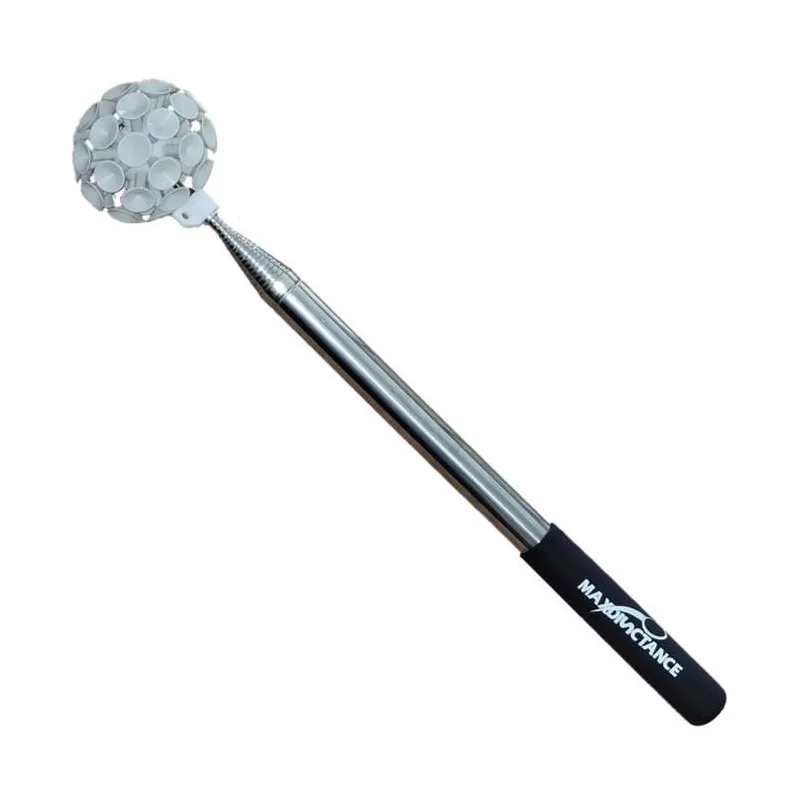
Max Disctance Max Stick 16 ft (Stainless)
4.5/5$45–$50 approx. street price
- Type: Telescoping pole, suction cup
- Reach: 16 ft
- Best at: Trees, ledges, near-shore water
- Packs down: ~4 ft
Pros
- Suction-cup ball grabs a disc with a tap — "works extremely well" is the consensus
- 16 ft of reach in a telescoping stainless pole under two pounds
- Works in water, trees and tall grass; loop on the handle clips to a bag
- 90-day manufacturer warranty; replacement heads sold separately
Cons
- Suction cups can lose their grip on a disc wedged in branches
- Stainless corrodes in saltwater — rinse it, or buy the carbon-fiber version
- Sections can stick after mud and grit; keep it clean
- Bulky compared with a rope retriever
Max Disctance Max Stick 16 ft — Best pole retriever
The Max Stick is the pole almost everyone means when they say “retriever.” A stainless-steel telescoping pole extends to 16 feet, weighs under two pounds, and ends in a patented suction-cup ball. The technique is one motion: extend, tap the disc, lift. “The suction cup ball at the end works extremely well — all you need is a tap on the disc,” is how one Infinite Discs reviewer described it, and that’s the consensus. It works in ponds, in creeks, in tall grass and — with a little more care — in trees, and there’s a loop on the handle to clip it to a bag or cart.
Three honest caveats from owners. First, suction cups grip a flat flight plate beautifully and grip a disc wedged edge-on in branches poorly; sometimes you knock the disc loose and then pick it up. Second, the stainless pole corrodes in saltwater — one reviewer was “pretty happy with this pole before it corroded and broke” on a coastal course; rinse it, or buy the carbon-fiber version. Third, grit in the sections makes them stick; wipe it after muddy retrievals. Max Disctance backs it with a 90-day warranty and sells replacement heads ($19) and a magnetic quick-release clip ($6). At $49 it’s the pole to buy.
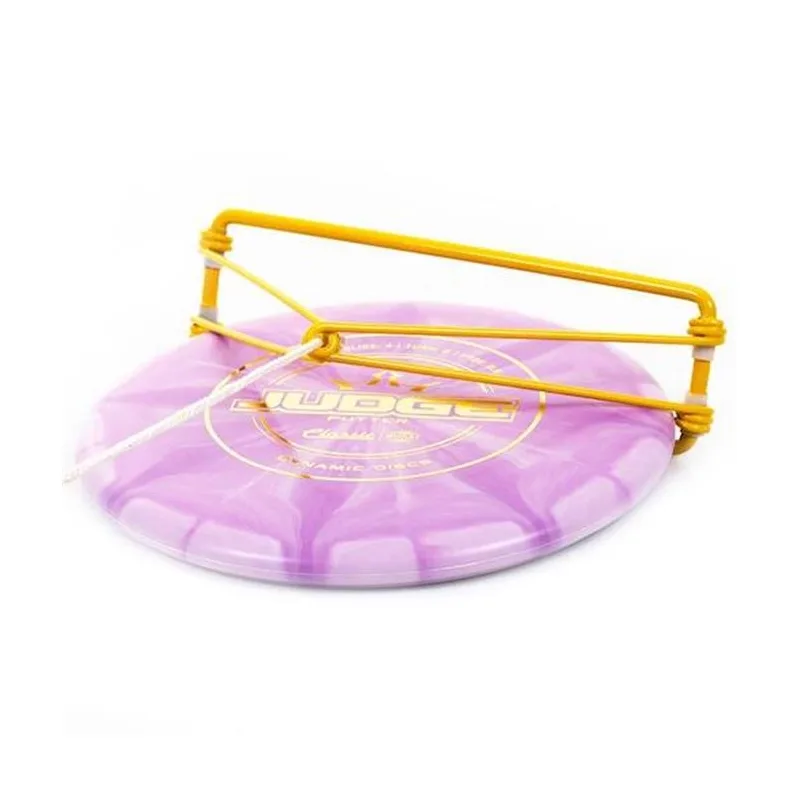
Dynamic Discs Golden Retriever
4.0/5$22–$25 approx. street price
- Type: Rope scoop
- Reach: 30+ ft (rope)
- Best at: Ponds, still water
- Packs down: Pocket
Pros
- Foldable frame with a 30+ ft rope — throw past the disc, drag it back
- Reaches discs 30–50 ft from shore that no pole can
- 'Has paid for itself more times than I could count' is the typical review
- Folds small enough to live in a bag pocket
Cons
- The rope tangles if you don't coil it; some owners report the disc slipping out
- Snags on rocks and branches; stirs up silt in shallow ponds
- Rated 4/5 across 11 Infinite Discs reviews — it works, with a learning curve
Dynamic Discs Golden Retriever — Best rope retriever
The Golden Retriever is a folding wire frame on a rope of 30-plus feet. Unfold it, throw it past the disc, let it sink, and pull: the frame skims the bottom, scoops the disc and holds it as you drag it in. It reaches discs 30–50 feet out — the ones no pole can touch — and it folds small enough to live in a bag pocket. The most common review is a version of “this retriever has paid for itself more times than I could count with the numerous discs we have pulled from water.”
It’s rated 4/5 across 11 Infinite Discs reviews rather than higher for two reasons owners agree on. The rope tangles if you don’t coil it deliberately after each use, and the frame can drop the disc on the way in if it snags a rock or a branch — one frustrated reviewer wrote that “the string constantly tangles” and “the disc never stays in.” Both problems are technique and terrain: on a pond with a sandy or muddy bottom, coiling the rope and pulling steadily, it works. On a rocky bottom, it fights you. The other trade-off is silt — a full frame dragged across a shallow pond clouds the water, which is where the Disc Claw comes in.
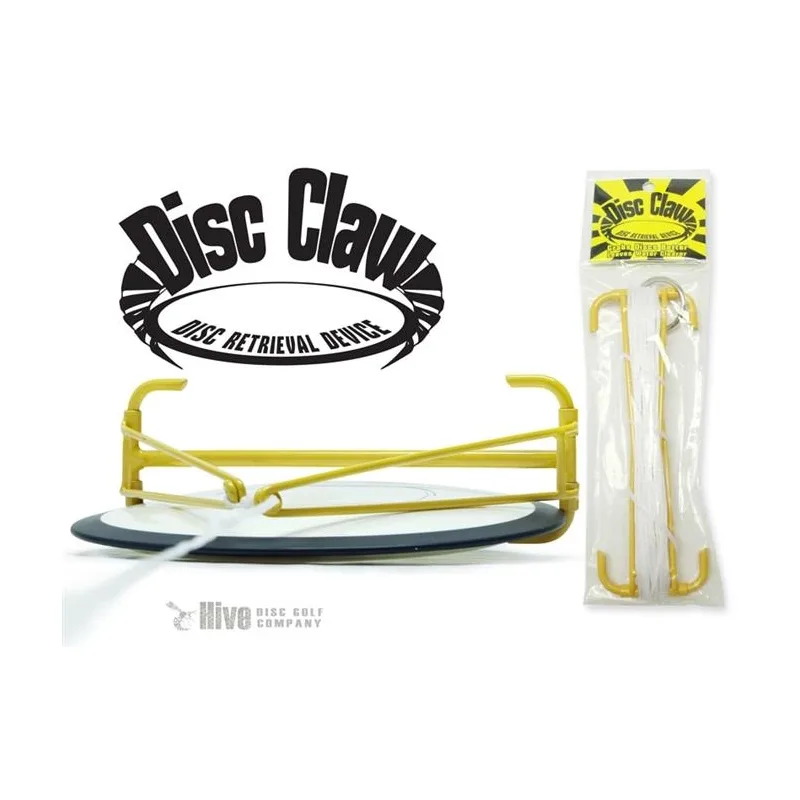
Hive Disc Claw
4.5/5$12–$20 approx. street price
- Type: Rope claw
- Reach: ~20 ft stock (50 ft with paracord)
- Best at: Ponds with sandy or silty bottoms
- Packs down: Pocket
Pros
- Dual claws grab a disc from either side; stirs up less silt than a full-frame scoop
- Collapses to almost nothing — "takes up no room in your bag"
- 'Pulled well over 50 discs from local course ponds' — 4.4/5 at Infinite Discs
- Cheapest retriever worth buying
Cons
- The included rope is short (~20 ft) — owners replace it with 50 ft of paracord
- Can snag on rocks; sometimes takes a few throws
Hive Disc Claw — Best compact retriever
The Disc Claw is the Golden Retriever’s smaller, cheaper rival: two short claw pairs, top and bottom, that grab a disc from either side instead of scooping it with a full frame. That design stirs up less silt, folds down to almost nothing — “takes up no room in your bag,” as one owner put it — and costs $20. Reviews are strong: 4.4/5, with owners reporting “well over 50 discs” pulled from course ponds. It ships with a string and a metal ring so you don’t lose the retriever itself.
The one universal complaint is the rope: at roughly 20 feet stock it’s too short for a real pond, and nearly every experienced owner replaces it with 50 feet of paracord ($5). Do that on day one and the Disc Claw becomes the best value retriever on this list. It can still snag on rocks and occasionally needs a second throw, like every rope retriever.
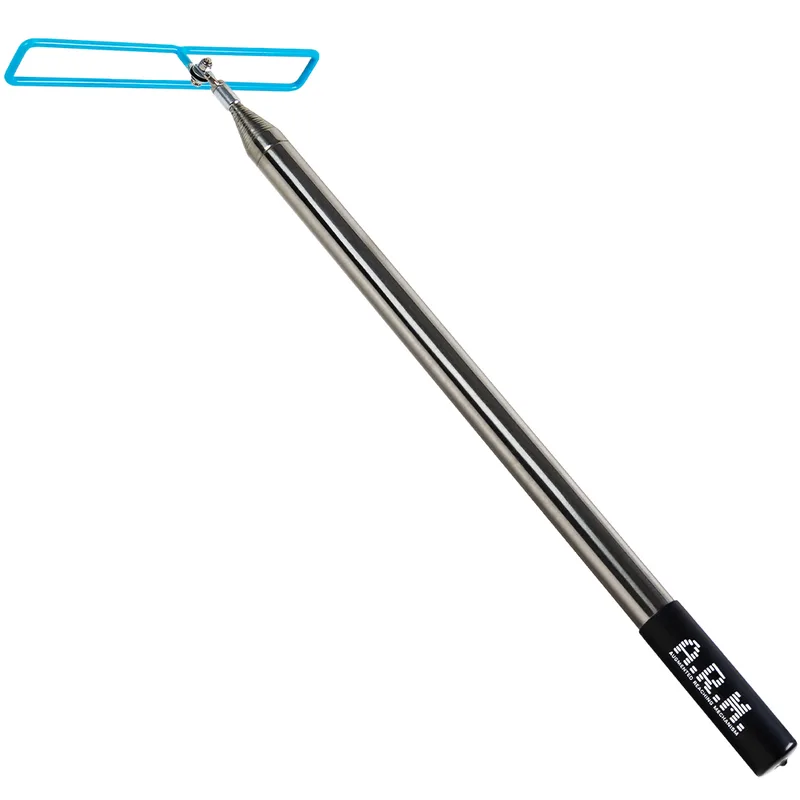
MVP A.R.M. Retriever
4.0/5$40–$60 approx. street price
- Type: Telescoping pole, two heads
- Reach: 21 ft
- Best at: Trees, deep-bank water
- Packs down: ~4 ft
Pros
- Telescopes to 21 ft — five feet more than the standard Max Stick
- Two attachments (a pivoting rectangle for water, a double claw for trees)
- MVP build and dealer network
Cons
- Frequently out of stock; few owner reviews yet
- 21 ft of pole gets whippy and hard to aim at full extension
MVP A.R.M. — Longest pole under $60
MVP’s “Augmented Reaching Mechanism” is a 21-foot telescoping pole — five feet more than the standard Max Stick — with two interchangeable heads: a pivoting rectangle for scooping discs out of water and a double claw for pulling them out of trees. For a course with a deep bank or a high canopy, the extra reach is the whole argument, and MVP’s dealer network means it’ll be easy to find when it’s in stock.
That’s the catch: it’s frequently out of stock, and it’s new enough that there are few owner reviews to weigh it against the Max Stick’s years of reports. The other honest note about any 21-foot pole is physics — at full extension it gets whippy and takes patience to aim. MVP’s own safety guidance (move slowly, mind the wind, stay away from power lines) is worth reading.
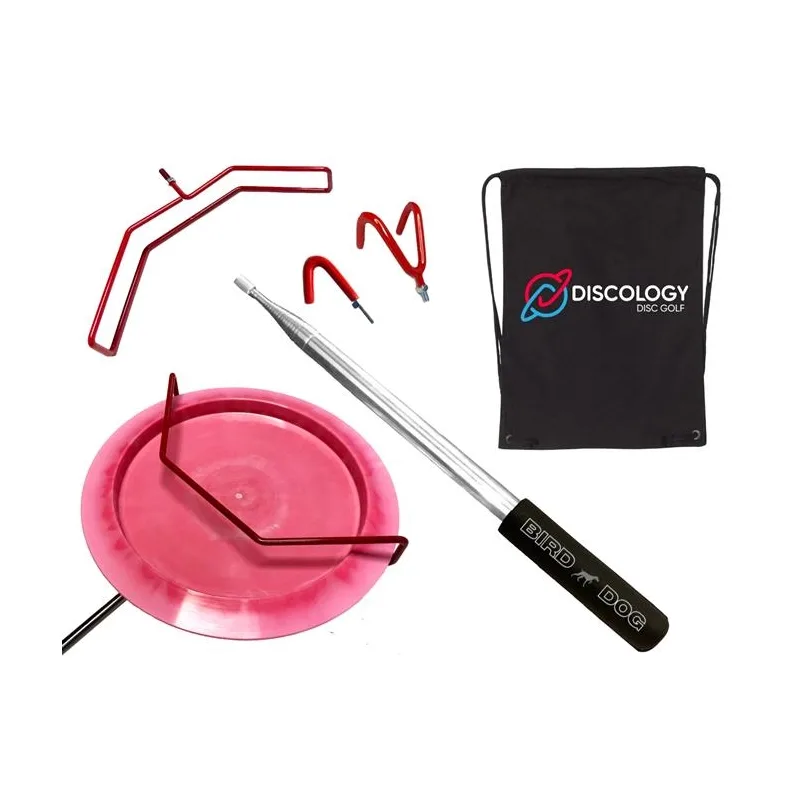
Bird Dog Disc Golf Retriever Pole
4.0/5$40–$45 approx. street price
- Type: Telescoping pole, hook heads
- Reach: 15 ft
- Best at: Trees, creeks
- Packs down: ~4 ft
Pros
- Stainless pole to 15 ft with swappable heads — ground scoop, tree hook, hook
- Drawstring bag included; no suction cup to wear out
Cons
- A foot shorter than the Max Stick; hooks need more finesse than a suction cup
- In and out of stock at the big retailers
Bird Dog Retriever Pole — Interchangeable heads, no suction cup
The Bird Dog is a stainless pole to 15 feet with three swappable heads — a ground scoop, a tree retriever and a hook — and a drawstring bag. Its case against the Max Stick is durability: hooks don’t wear out the way a rubber suction cup does, and there’s nothing to lose grip in cold weather. Its case against it is finesse: a hook has to be worked under or around a disc, where a suction cup just needs a tap.
At $43 it’s a good pole, a foot shorter than the Max Stick, and — like most of this category — in and out of stock at the big retailers. Buy it if you prefer hooks; buy the Max Stick if you want the fastest retrieve.
How to actually use a rope retriever
Most one-star reviews of rope retrievers describe the same first afternoon: a tangled rope, a frame that came back empty three times, and a disc still in the pond. The technique is simple but it isn’t obvious, and owners who’ve pulled fifty discs all do the same things:
- Coil the rope in loose loops in your off hand before every throw, the way you’d coil a garden hose. A rope thrown from a tangled pile stops short and snags on itself.
- Throw well past the disc, not at it. The retriever has to land beyond the disc and sink before you pull; aim four or five feet past and slightly to one side.
- Let it sink. A second or two. Pulling while the frame is still settling skims it over the top of the disc.
- Pull slowly and steadily, keeping the rope low. A steady drag keeps the frame on the bottom; a jerk lifts it off. If the disc is on a slope, pull from downhill so the frame climbs into it.
- When you feel it catch, keep the same pace. Stopping lets the disc slide out; speeding up bounces the frame.
- Rinse the rope and frame afterwards and let them dry before they go back in the bag, or the next round starts with a mildewed knot.
If the frame keeps snagging, the bottom is rocky or full of branches, and that’s a pole job — or, honestly, a disc that’s gone.
Caring for a pole retriever
Telescoping poles fail in two ways, and both are preventable. Grit between the sections makes them stick or refuse to collapse: wipe the pole down after any muddy or sandy retrieve, and extend and collapse it fully at home to clear the joints. And stainless steel is only stainless in fresh water: on a coastal or brackish course, rinse the pole after every use, or spend the extra on carbon fiber. The suction cup itself is a wear item — it loses grip as it ages and cracks in freezing weather — so keep a spare head ($19) in the car if you rely on the pole. Carry the pole on the bag, not in it: the Max Stick’s handle loop and most bags’ umbrella straps exist for exactly this.
Retrievers we considered but didn’t rank
- Max Stick XF carbon fiber (10 / 16 / 20 / 30 ft, $59–$158): the same suction-cup system on a lighter, non-corroding pole with more reach. Excellent, and the right buy for river or saltwater courses or for anyone who’s already lost $150 in discs to one lake. Ranked out on price for most players.
- InZone Kwik-Stik (mini and XXL, $40–$65): a well-regarded compact pole line, out of stock at the time of writing.
- DiscreetTriever Driver Diver ($13): a small hook attachment that turns a putter or a stick into a retriever. Clever for a minimalist bag; not a substitute for a pole.
- Wrist Rocket ($7): a slingshot for knocking discs out of high trees. It works, it’s cheap, and it’s the only tool here for a disc 30 feet up a pine.
How to choose
- Your course has ponds: Golden Retriever or Disc Claw (plus 50 ft of paracord). Buy this first.
- Your losses are trees, brush and creek banks: Max Stick 16 ft.
- Both, and you want it done: Max Stick plus Disc Claw — about $70 total, and you’ll have both in the bag.
- Deep banks, high canopy: MVP ARM (21 ft) when it’s in stock.
- River, saltwater, or a lot of lost discs: carbon-fiber Max Stick.
- Discs in very high trees: Wrist Rocket.
One more piece of advice from owners across every model: mark your discs with a name and phone number. Retrievers get back the discs you can see; a marked disc gets back the ones you can’t. For which bags have a place to strap a pole, see our bag buying guide by capacity.
How we evaluated this gear
We have not physically tested every product on this page. Ratings are based on manufacturer specifications, PDGA-approved flight data, and hundreds of aggregated owner reviews and community discussions (r/discgolf, retailer reviews, club forums). Where we describe how something "feels" or "flies", that reflects the consensus of experienced players, not a lab test. We update ratings when the consensus changes.