Innova Destroyer Review: The Most-Thrown Distance Driver, and Who It's Actually For
The Innova Destroyer (12/5/−1/3) is the reference distance driver. Flight, Star vs Champion vs Pro plastics, why runs vary, and whether you have the arm for it.
This post contains affiliate links. If you buy through them we may earn a commission at no extra cost to you. Learn more.
Table of contents
The Innova Destroyer is the distance driver other distance drivers get compared to. Released in 2007, it’s been thrown to world titles by multiple champions, it exists in more runs, plastics and signature editions than any other driver, and it’s the most common answer to “what distance driver should I get?” — which is a problem, because most of the people asking that question aren’t ready for it yet.
This review is honest about both halves: why the Destroyer is superb for players with the arm, and why it’s the wrong disc for players without it.
We haven’t flight-tested Destroyers for this review. The flight description below is based on Innova’s published flight data, PDGA specs, and an enormous body of owner and community feedback. With the Destroyer specifically, run-to-run variation is part of the consensus, and we’ve described it rather than pretended a single flight exists.
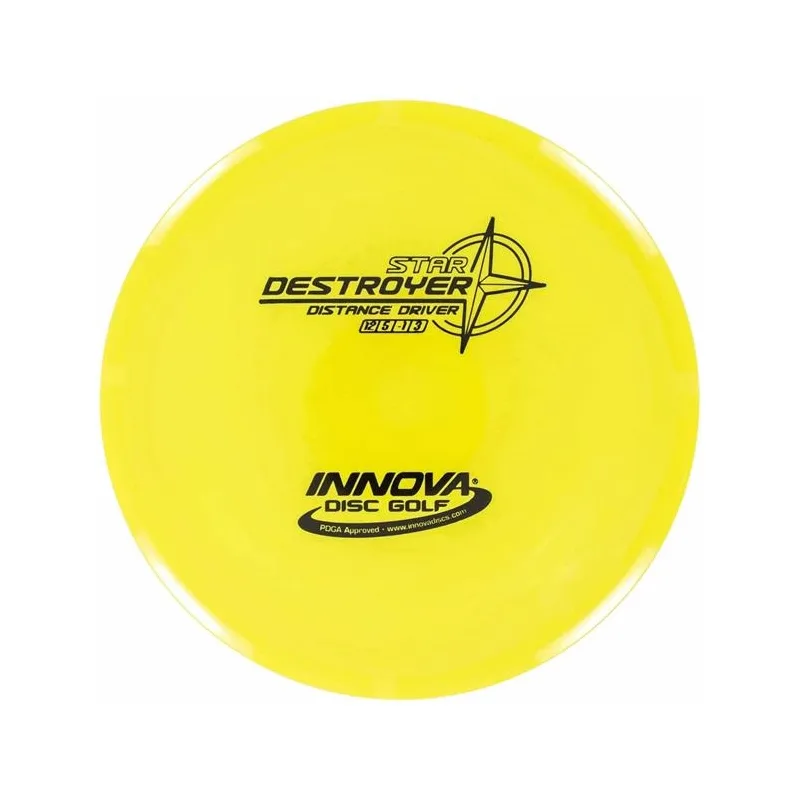
Innova Destroyer
4.5/5$9 (DX) – $22 (Star/Champion/Halo) approx. street price
- Flight numbers: 12 / 5 / -1 / 3
- Stability: Stable → overstable
- Plastic options: DX, Pro, Champion, Star, GStar, Halo Star, Blizzard Champion, Metal Flake
- Skill level: Intermediate → pro
Pros
- The most-thrown distance driver in the sport; huge stock of runs, plastics and weights
- Long, controllable flight with a dependable fade for players with 300+ ft of power
- Excellent forehand and headwind disc in stable runs
- Holds value; easy to buy and sell used
Cons
- Speed 12 needs real arm speed — beginners see an early, hard left hook and short distance
- Stability varies noticeably between runs and plastics; "a Destroyer" isn't one disc
- Premium tour-series runs are expensive and collectible rather than practical
| Product | Our rating | Flight numbers | Stability | Plastic options | Skill level | Price | Buy |
|---|---|---|---|---|---|---|---|
| Best distance driver for strong arms Innova Destroyer | 4.5/5 | 12 / 5 / -1 / 3 | Stable → overstable | DX, Pro, Champion, Star, GStar, Halo Star, Blizzard Champion, Metal Flake | Intermediate → pro | $9 (DX) – $22 (Star/Champion/Halo) | Check Price |
| Gentler alternative Innova Wraith | 4.5/5 | 11 / 5 / -1 / 3 | Stable | DX, Pro, Champion, Star, GStar, Halo Star | Intermediate → pro | $9 (DX) – $22 (Star/Champion/Halo) | Check Price |
| Discraft equivalent Discraft Nuke | 4.0/5 | 13 / 5 / -1 / 3 | Stable → overstable | Pro D, Z, ESP, Z FLX, ESP FLX, Big Z | Advanced → pro | $16–$22 | Check Price |
Specs
| Innova Destroyer | |
|---|---|
| Type | Distance driver |
| Flight numbers | 12 / 5 / −1 / 3 |
| Diameter | 21.1 cm |
| Rim width | ~2.2 cm |
| Weights | 130–175 g (Blizzard Champion for the lightest; 165–175 g standard) |
| Plastics | DX, Pro, Champion, Star, GStar, Halo Star, Blizzard Champion, Metal Flake Champion, tour series |
| PDGA approved | 2007 |
The arm-speed question, first
Every review of the Destroyer should start here. A speed 12 disc is designed to fly properly when it leaves the hand at roughly 60 mph or more — the speed of a player throwing a fairway driver 300 feet on a flat line. Below that speed, the disc never enters the part of its flight where the −1 turn happens; it just fades. The result is the throw every beginner has seen: a hard left hook 150 feet out and a total distance shorter than a Leopard.
So the honest test is: can you throw a Teebird or a Leopard3 about 300 feet, flat? If yes, the Destroyer will reward you. If not, the Leopard or a Wraith will go farther for you today and teach you more. Our disc types guide explains why.
How the Destroyer flies (with the arm)
For a player with the power, a fresh Star Destroyer thrown flat holds a long, gently rising line, drifts slightly right at the top of its speed, and comes back with a strong, reliable fade. It’s long, but the reason pros throw it isn’t raw distance — it’s that the disc is workable: hyzer-flips, flex shots, big forehands and headwind drives all come out of the same mold, and the fade is dependable enough to plan around.
Two traits stand out in owner feedback:
- Forehand. The Destroyer’s rim and stability make it one of the most popular forehand drivers in the sport.
- Wind. A stable or overstable run — Champion, or a max-weight Star — holds up in headwinds that turn most drivers over.
Its weakness, other than the speed requirement, is consistency across runs, covered below.
Which plastic?
| Plastic | Feel | Durability | Stability | Best for |
|---|---|---|---|---|
| Pro | Soft, tacky | Low-medium | Noticeably less stable | A “first Destroyer” for moderate arms; turnovers |
| DX | Soft | Low | Less stable, beats in fast | Cheap; rarely the right Destroyer |
| Star | Firm, grippy | High | Stable | The main Destroyer for most players |
| GStar | Flexible | High | Slightly less stable than Star | Cold weather |
| Champion | Firm, glossy | Very high | Most overstable, especially new | Headwinds, forehands, tree-hitting |
| Halo Star | Firm | High | Slightly more stable than Star | Looks, a touch more fade |
| Blizzard Champion | Firm, light | High | Light weights (130–155 g) | Players at the edge of the required arm speed |
Consensus: Star Destroyer at 165–170 g as a first one; add a Champion for wind once you’ve found the flight you like. The Blizzard Champion Destroyer, at 130–155 g, is an underrated option for players who have almost — but not quite — the arm for a full-weight one.
Why “a Destroyer” isn’t one disc
Innova has made the Destroyer continuously since 2007 in many plastics, weights and runs, and the community has documented for years that they don’t all fly the same. Differences in plastic blend, dome height and rim shape produce real differences in stability — some runs are famously “beefy”, others turn easily. Signature runs (players’ tour-series discs) are sought out precisely because a specific run is known to fly a certain way.
For a buyer this means two things. Don’t judge the mold on one disc. And when you find a Destroyer you love, buy a second from the same run and plastic — a replacement bought two years later may not match.
Alternatives
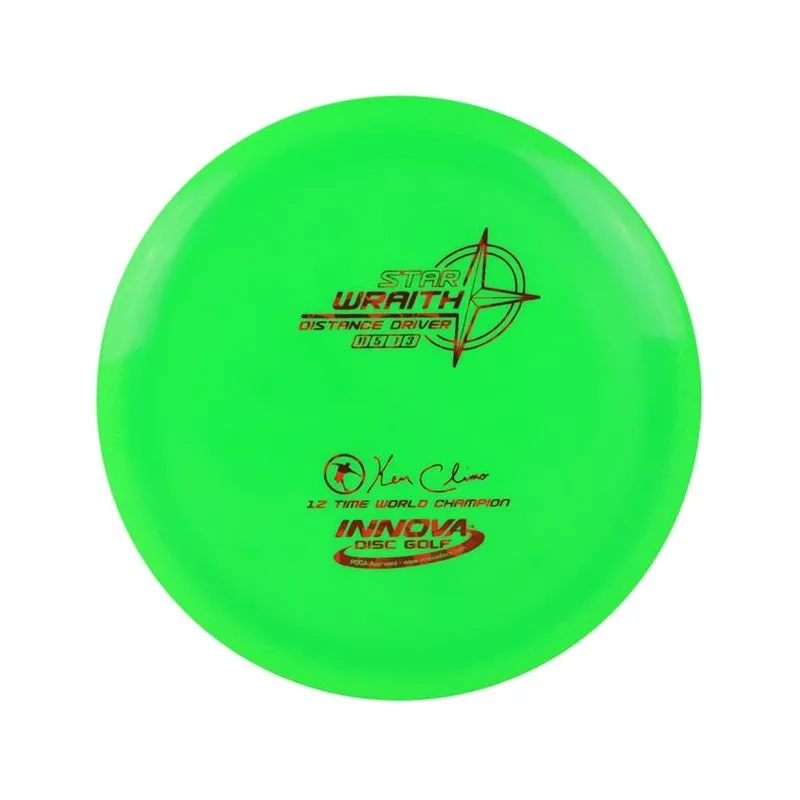
Innova Wraith
4.5/5$9 (DX) – $22 (Star/Champion/Halo) approx. street price
Pros
- One speed slower with a slightly narrower rim; easier to control and to get up to speed
Cons
- Less overstable — less reliable in strong wind than a stable Destroyer
Innova Wraith (11/5/−1/3) — one speed slower, with a slightly narrower rim, and easier to get up to speed (full comparison: Destroyer vs Wraith). For players who pass the 300-foot test only barely, the Wraith is the better first distance driver; it gives up a little in headwinds.
Pros
- Discraft's max-distance driver; ESP feels grippier than Star for many players
Cons
- Speed 13 — needs even more arm than the Destroyer
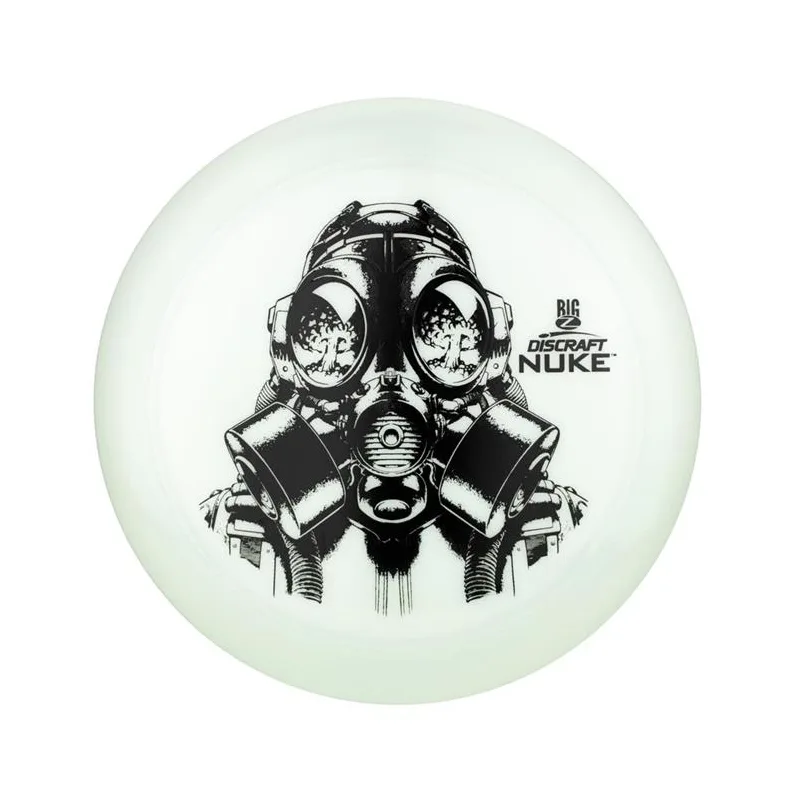
Discraft Nuke (13/5/−1/3) — Discraft’s answer, one speed faster and demanding even more arm. Players who prefer ESP plastic’s grip to Star’s choose it; it’s not an easier disc. The wider brand picture is in Innova vs Discraft.
Who should buy the Destroyer
Buy it if:
- You throw a fairway driver 300 feet flat and want a longer, workable, reliable disc.
- You throw forehand and want a driver that doesn’t flip.
- You want a mold you’ll be able to find in any plastic, weight and run for the rest of your playing life.
Look elsewhere if:
- You’re in your first season (→ Leopard, Leopard3).
- You’re close but not there (→ Wraith, or a Blizzard Champion Destroyer under 155 g).
- You want one disc that flies the same forever (→ nothing in speed 12 does; but Champion holds flight longest).
Verdict
4.5/5For the right player the Destroyer is a five-star disc; for the wrong player it’s a two-star one, and the difference is entirely arm speed. We’ve rated it for the intermediate-and-up player it’s built for, and docked it half a star for the run-to-run variation that makes buying one a small adventure. If you’re not sure you’re ready, you aren’t — go throw a Leopard for a season, and come back. It’ll still be here.
How we evaluated this gear
We have not physically tested every product on this page. Ratings are based on manufacturer specifications, PDGA-approved flight data, and hundreds of aggregated owner reviews and community discussions (r/discgolf, retailer reviews, club forums). Where we describe how something "feels" or "flies", that reflects the consensus of experienced players, not a lab test. We update ratings when the consensus changes.